
Anyone who lives in Cumbria knows the weather is not a talking point. It is a design brief.
Where the water goes now
A solid surface such as old concrete or worn tarmac sheds water. It runs to the lowest point, which is often your front door, your garage or the dip where it freezes first in January. Then it heads for the road and the drains.
What permeable means in practice
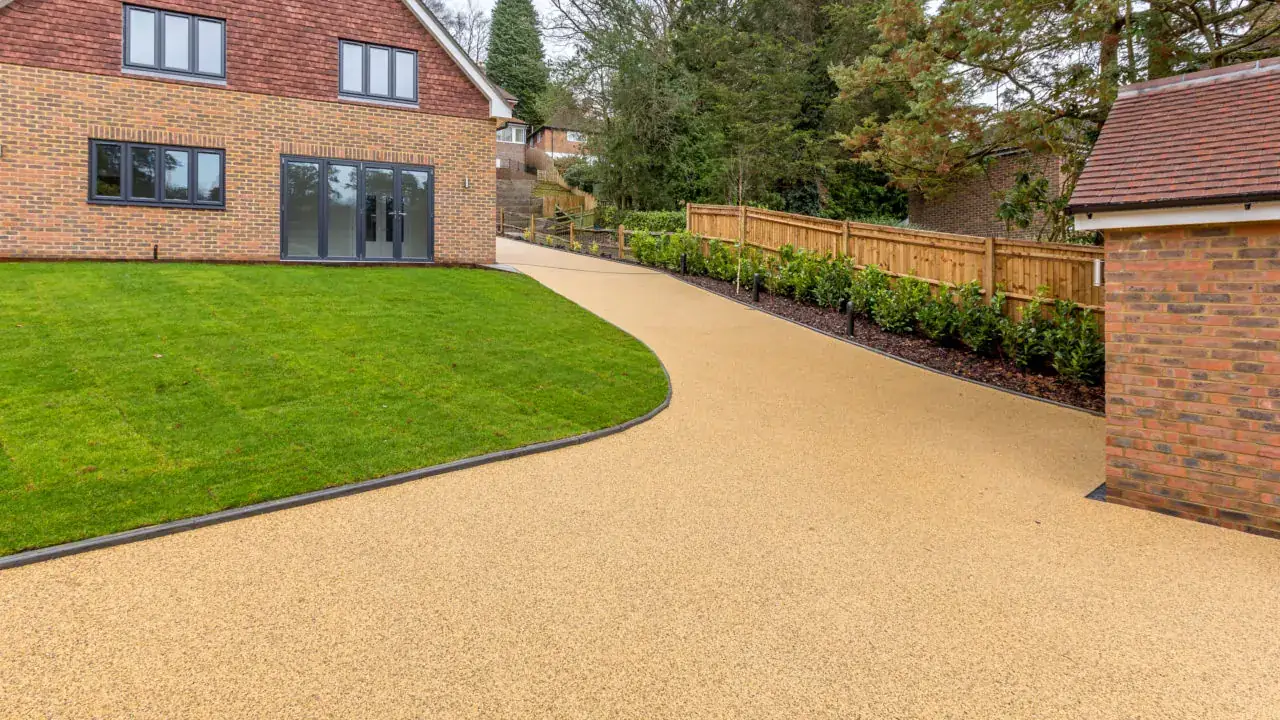
A resin bound surface has tiny gaps between the stones. Rain soaks through to the ground below rather than sitting on top. On sloping or low-lying drives, which are common across rural Cumbria, that can transform how the drive behaves in a downpour.
The best drainage system is the one you never notice, because the puddle simply never forms.
Send us a photo on WhatsApp or book a free site visit. No pressure, no obligation.
The planning angle
In England, covering more than five square metres of a front garden with an impermeable surface usually needs planning permission unless the water drains to a lawn or border. A permeable surface generally sidesteps that. It is one of the reasons resin bound has become so popular for front gardens.
Is resin the only option?
No. Block paving can be designed to drain, and tarmac can be laid with falls and drainage so water goes where you want it. The point is to plan for the water from the start, which is exactly what we look at on a free site visit.
Curious what a permeable drive would look like at your house? Browse our 26 resin blends or read about resin driveways in Cumbria.