
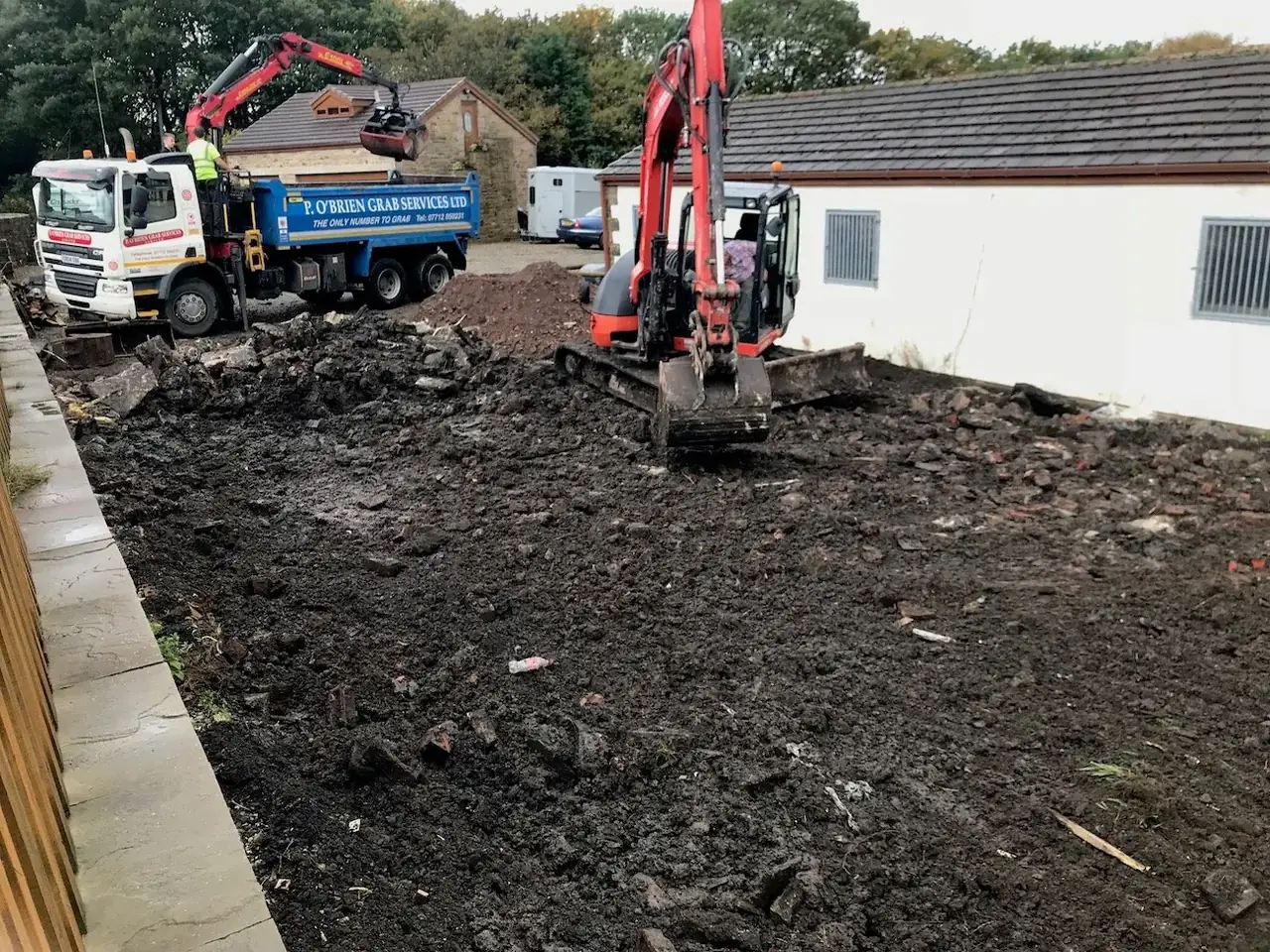
On day one, your front garden will look worse than it has ever looked. That is normal. In fact, if it does not, you should be worried.
Before anything moves: the site visit
A proper quote starts with someone standing on your drive. We measure up, check the levels, look at where the water goes when it rains and talk through styles and colours. Anyone quoting a driveway from a photo alone is guessing at the most important part.
Day one: digging out
The old surface, soil and debris come out to the right depth. This is the noisy, muddy day, with a digger and usually a skip or a lorry on the road. It feels drastic, but a new surface laid on old, soft ground will sink, crack or rut.
The finish is what you see. The sub-base is what you pay for.
The sub-base: the bit you never see again
Crushed stone goes in and is compacted in layers until it is solid. This carries the weight of your car, every single day, for years. It is the part cheap jobs skimp on, because once the surface is down, nobody can check.
Send us a photo on WhatsApp or book a free site visit. No pressure, no obligation.
Edges, then the surface
Kerbs or edging are set to hold everything in place. Then the surface goes down: hot tarmac rolled in layers, blocks laid on a screeded sand bed, or resin mixed and trowelled by hand.
Before you drive on it
- Tarmac: you can usually walk on it the same day, but keep cars off for the first three days while it hardens.
- Resin: keep cars off for at least 24 hours, longer in cold or damp weather.
- Block paving: usable once it has been compacted and the joints are filled.
What we leave behind
We clean up before we go. The skip disappears, the road is swept, and you are left with a driveway built properly from the ground up. If you want to see the difference the groundwork makes, look at the before and after photos in our gallery.