
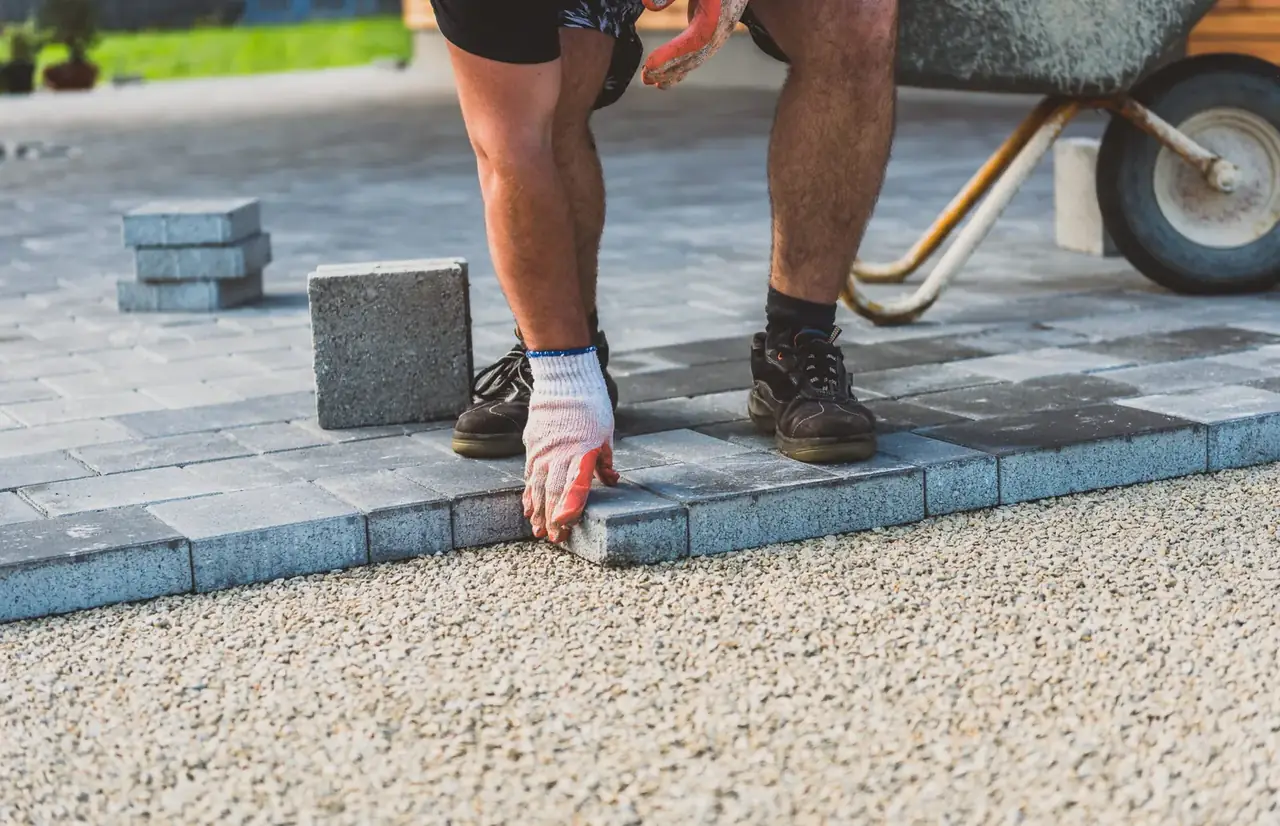
Ask a contractor what colour your new drive will be and you will get a quick answer. Ask how deep the sub-base is and you will learn a lot more about them.
What the sub-base actually does
Your car is heavy, and it puts all that weight onto four small patches of tyre. The sub-base spreads that load across the ground so the surface does not sink where you park. It also helps water drain away from the surface.
How deep is deep enough?
For a typical domestic driveway, a well-compacted layer of crushed stone of around 150mm is a common starting point. Soft, clay or wet ground, heavier vehicles and farm traffic all call for more. The only way to know is to look at the ground on site.
A thin sub-base saves a few hours on day one and costs you a driveway by year five.
Send us a photo on WhatsApp or book a free site visit. No pressure, no obligation.
Compaction matters as much as depth
Loose stone is not a sub-base. It needs to be compacted in layers with the right equipment until it is solid. Skip this and the stone settles later, taking your surface with it.
Three questions to ask any contractor
- How deep will you dig out, and why?
- What goes into the sub-base, and how will it be compacted?
- Where will the water go?
We are happy to answer all three on site, in plain English. It is how every block paving, tarmac and resin job we do begins.