
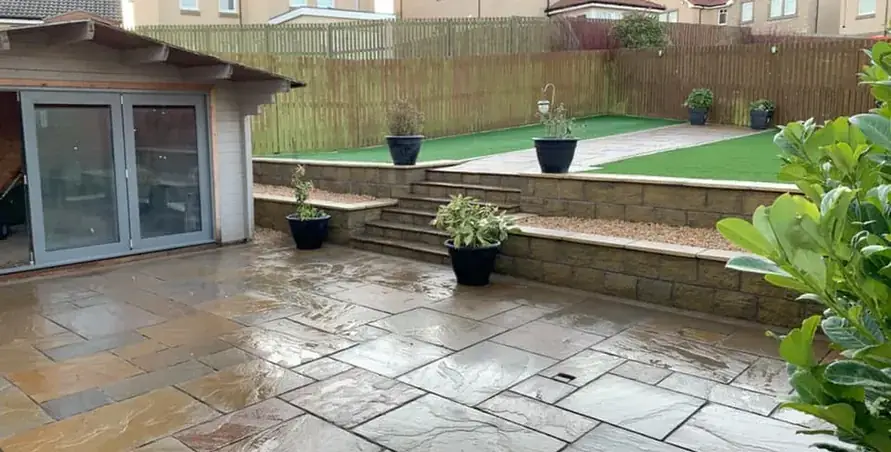
Ask anyone who has lived with a patio for a few years what they would change. Almost nobody says "the colour of the slabs".
1. Follow the sun
Stand in the garden at the times you will actually use it: Saturday breakfast, a weekday evening. The best spot is not always right outside the back door.
2. Size it for real life
Put your table and chairs on the lawn and walk around them with a chair pulled out. Patios almost always end up feeling smaller than they looked on paper.
3. Link it to the rest of the garden
Paths, steps and lawn edges should flow from it naturally. A patio stranded in the middle of the lawn rarely gets used.
The best patios feel like an extra room. The worst feel like a car park.
Send us a photo on WhatsApp or book a free site visit. No pressure, no obligation.
4. Plan where the rain goes
A gentle fall, typically around 1 in 60, should take water away from the house and towards a lawn, border or drain.
5. Mind the damp proof course
A patio should usually sit at least 150mm below your house's damp proof course, so rain does not splash up and cause damp.
6. Choose materials that suit the house
Natural stone, porcelain, block paving or resin can all work. Match the tones of your brick, render and driveway so it all looks like one design. See our landscaping work for ideas.